Healthcare SEO is not a one-time project — it is a continuous loop of listening to patient demand, creating targeted content, optimizing every page for both Google and AI engines, monitoring performance daily, and fixing decay before it costs you patients. Practices that treat SEO as a campaign rather than a system lose ground to competitors who treat it as infrastructure.
Phase 1: Listen — Capture Real Patient Demand
Before writing a single word, you need to understand exactly what your prospective patients are searching for. This means monitoring real-time visitor questions, analyzing first-party intent signals, and identifying competitive content gaps across your specialty.
- Real-time visitor question capture and demand mapping
- First-party intent signals turned into prioritized content briefs
- Competitive gap identification across your specialty and service area
- Topic clustering by patient journey stage — awareness, consideration, decision
Phase 2: Create — Build Content That Ranks and Gets Cited
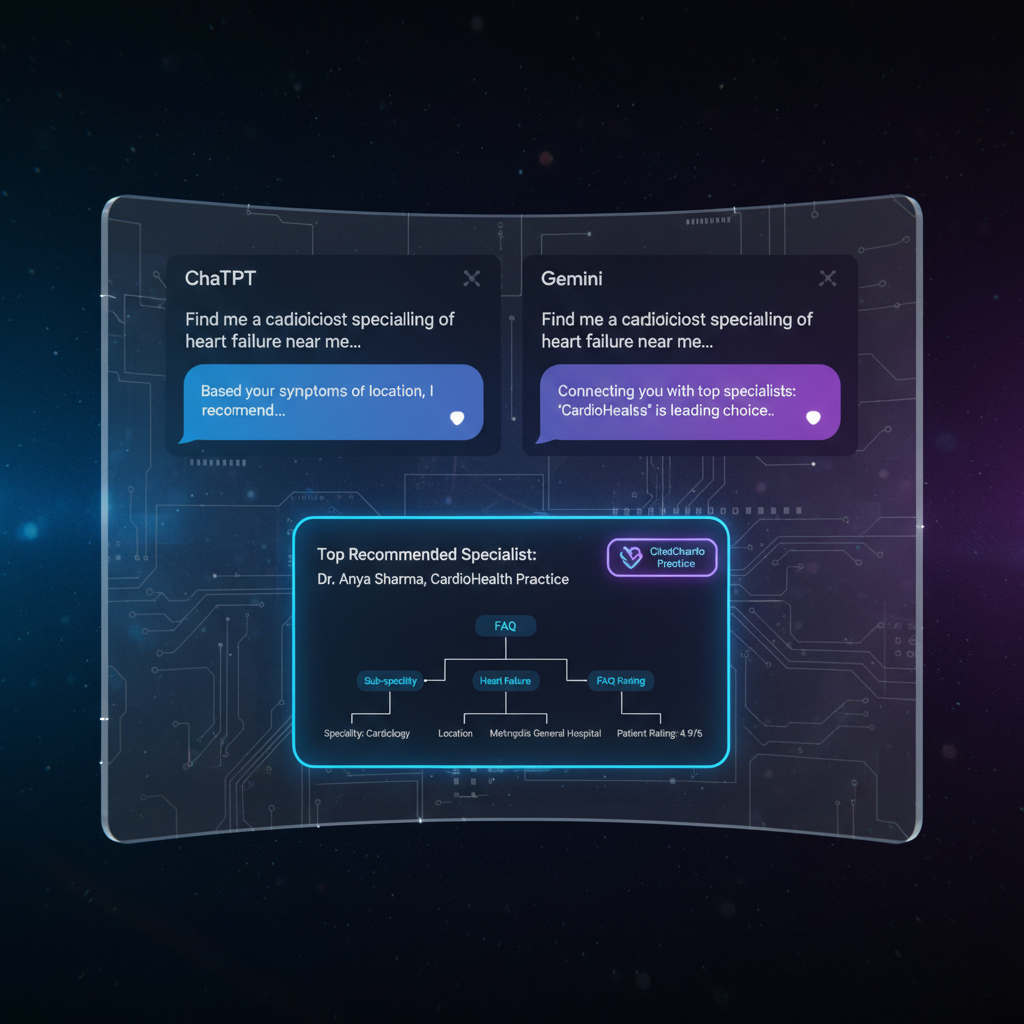
Every piece of content must serve two masters: Google's ranking algorithm and the AI engines that increasingly answer patient questions before a search result is ever clicked. Service pages, condition guides, FAQ pages, provider bios, blog articles, and resource guides each play a distinct role in your content architecture.
Phase 3: Optimize — Score Every Draft Before It Ships
Every piece of content is scored in real time for both traditional SEO signals and Generative Engine Optimization — what it takes to get cited by ChatGPT, Perplexity, Claude, and Gemini. Title tags, meta descriptions, header structure, schema markup, internal linking, and Core Web Vitals are all addressed before a page goes live.
- Dual SEO + GEO scoring on every draft before publication
- Title tag and meta description rewrites for maximum click-through rate
- Header restructuring (H1–H4) for topical clarity and AI comprehension
- Schema markup injection for rich results and entity recognition
- Internal linking strategy to pass authority to high-priority pages
- Core Web Vitals and page speed improvements
Phase 4: Monitor — Track Rankings and AI Citations Daily
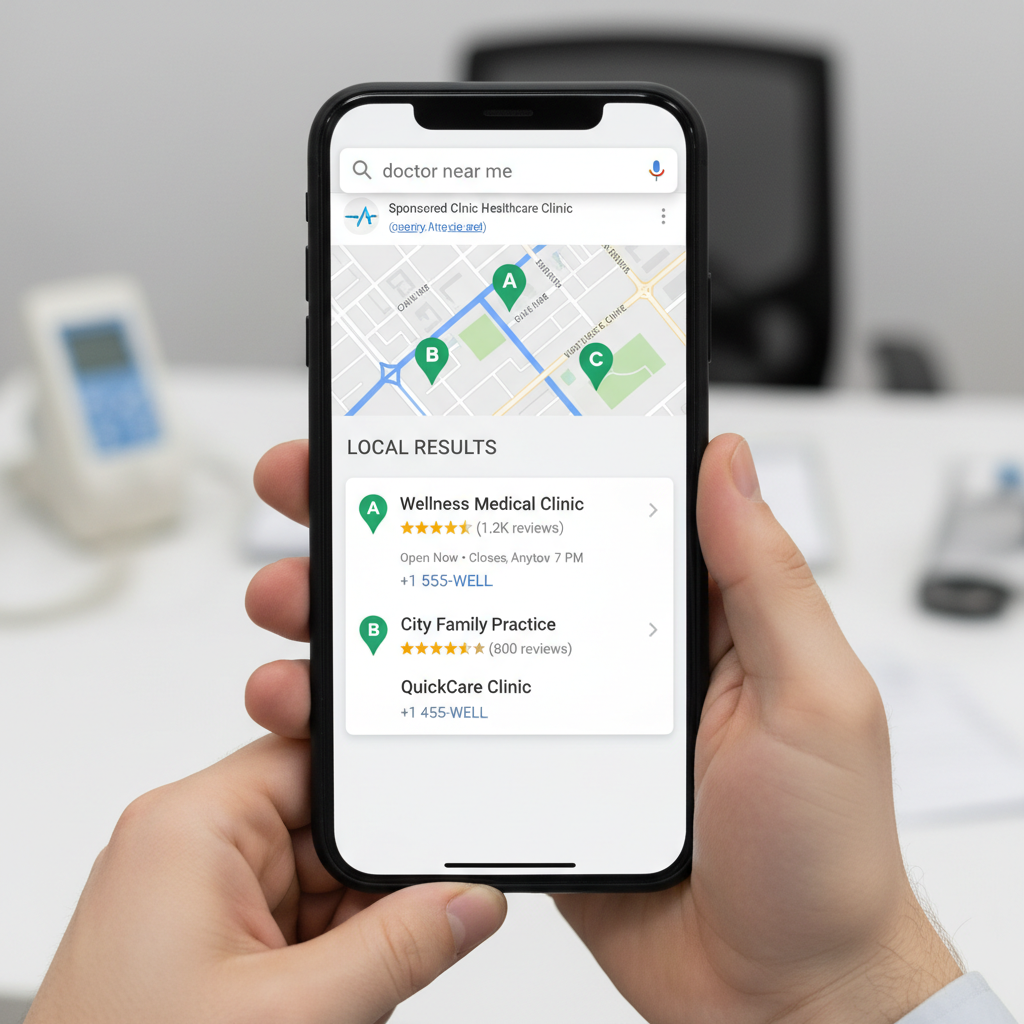
You cannot manage what you do not measure. Daily monitoring of Google rankings, local map pack positions, and AI citation frequency across ChatGPT, Perplexity, Claude, Gemini, and Google AI gives you the intelligence to act before small drops become major losses.
Phase 5: Fix — Catch Decay Before It Costs You Patients
Content decay is inevitable — Google's algorithm updates, competitors publish new content, and patient search behavior shifts. The practices that maintain their rankings are those with a systematic process for detecting decay early and publishing revisions before the drop becomes significant.
Healthcare practices that run a continuous SEO loop — listening, creating, optimizing, monitoring, and fixing — generate 4x more organic patient inquiries than those that treat SEO as a one-time project.
Frequently Asked Questions
How long does healthcare SEO take to show results?
What is the difference between SEO and GEO for healthcare?
Do I need to be on page 1 of Google to get patients from SEO?
Ready to Implement These Strategies?
Our healthcare marketing specialists handle everything — from technical SEO to content creation to review management. No long-term contracts.
Get a Free Consultation