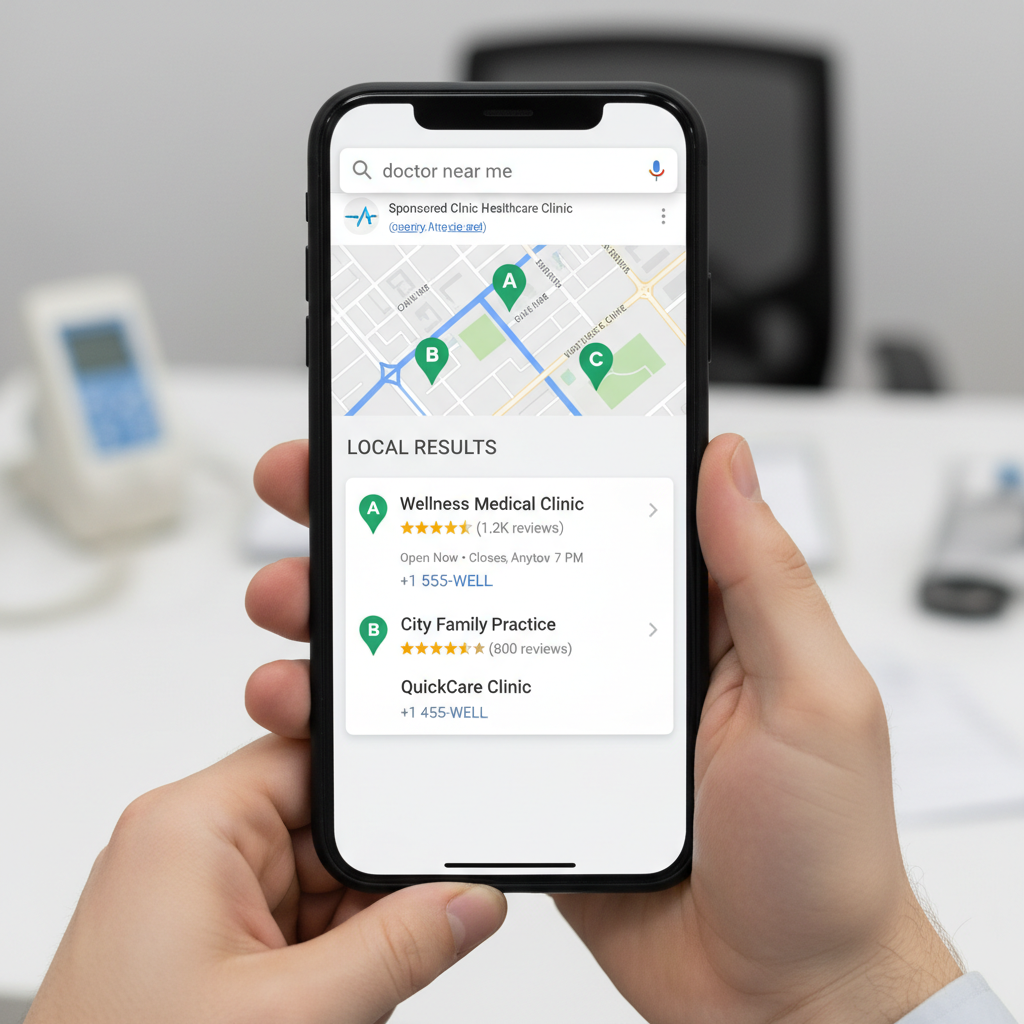
The most common location page mistake in healthcare marketing is the "find and replace" approach: take one page template, swap the city name throughout, and publish 20 identical pages. Google's algorithm detects this as thin, duplicate content and either ignores the pages entirely or penalizes the entire set. Building location pages that actually rank requires a fundamentally different approach — one that treats each city as a distinct content opportunity.
The Unique Content Framework for Healthcare Location Pages
Every location page must be drafted with its own outline, keyword set, and locally relevant content. This does not mean writing 2,000 words of completely original content for every city — it means identifying the specific local context that makes each market distinct and weaving that context throughout the page.
- Local landmarks and neighborhoods — reference specific areas patients recognize
- Patient demographic context — age distribution, common conditions, insurance landscape
- Local healthcare ecosystem — nearby hospitals, referral relationships, community health needs
- Market-specific services — highlight services with particularly high demand in that city
- Local provider bios — connect specific physicians to the communities they serve
- Community involvement — sponsorships, health fairs, local partnerships
City-Specific Keyword Architecture
Each location page needs its own keyword set built around the specific city, its neighborhoods, and the services most relevant to that market. The title tag, H1, and first paragraph should all include the primary city-specific keyword. Supporting keywords — neighborhood names, zip codes, nearby cities — should appear naturally throughout the body copy and in the FAQ section.
Local FAQ Sections: The Dual-Purpose Content Strategy
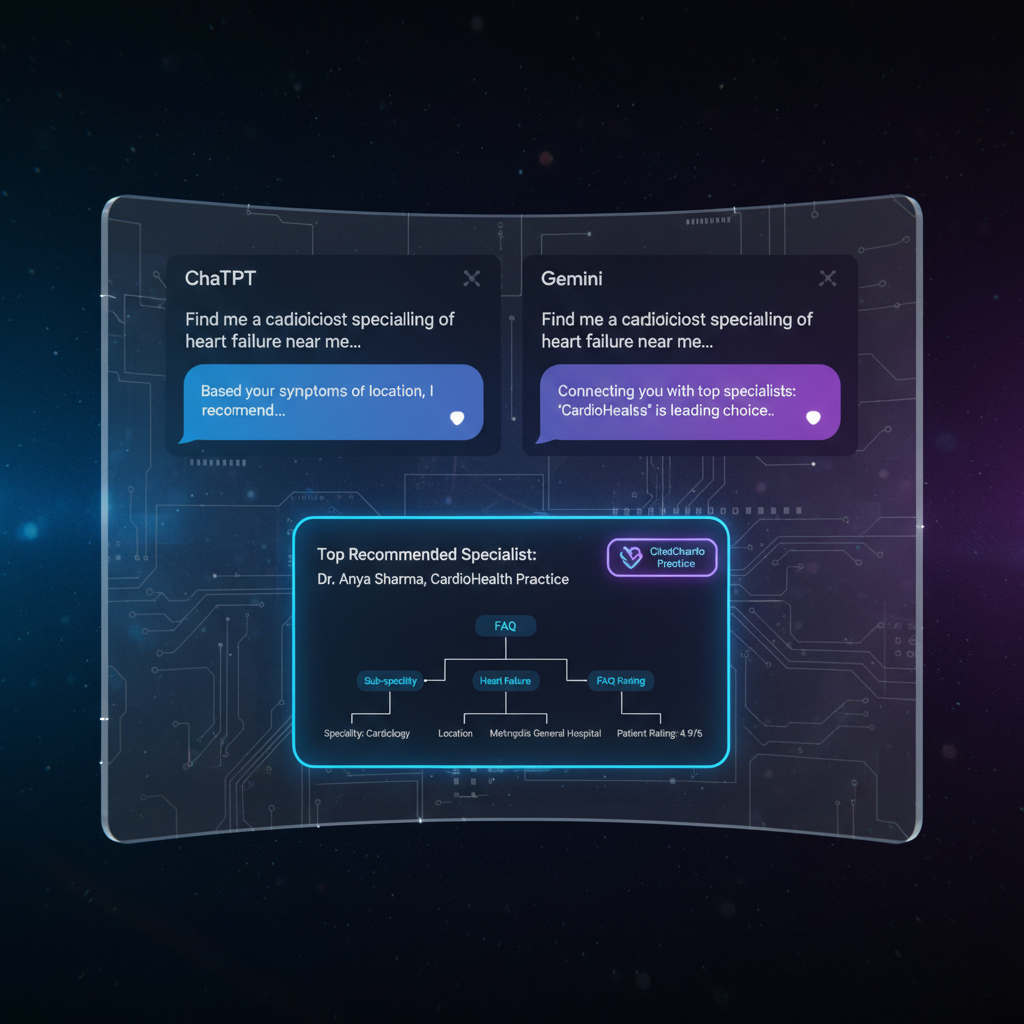
A well-crafted local FAQ section on a location page serves two distinct purposes. First, it captures long-tail search traffic from patients asking specific questions about healthcare in that city. Second, it provides the structured Q&A content that AI systems extract when generating answers to patient queries — making your location page a source that ChatGPT, Gemini, and Perplexity cite when patients ask about providers in specific cities.
Building Trust Through Local Social Proof
Patients choosing a healthcare provider want evidence that the practice has served people like them, in their community. Location pages that include city-specific patient testimonials, case studies from local patients (with consent), and references to community involvement convert at significantly higher rates than pages with generic social proof. Even a single authentic local testimonial can meaningfully improve conversion rates for that market.
Technical Elements Every Location Page Must Include
- LocalBusiness and MedicalOrganization schema with precise geo-coordinates
- Embedded Google Map centered on the practice location
- City-specific title tag: "[Specialty] in [City], [State] | [Practice Name]"
- Unique meta description referencing the city and primary service
- Breadcrumb navigation: Home > Locations > [City]
- Internal links to relevant service pages and the main locations hub
- Click-to-call phone number with local area code
- Driving directions from major local landmarks
Location pages with genuinely unique, locally relevant content rank in the local 3-pack 5x more frequently than template-based pages — and they convert visitors into patients at 67% higher rates because they demonstrate authentic local presence.
Frequently Asked Questions
How long should a healthcare location page be?
Can I use the same testimonials on multiple location pages?
How do local FAQ sections help with AI search visibility?
Ready to Implement These Strategies?
Our healthcare marketing specialists handle everything — from technical SEO to content creation to review management. No long-term contracts.
Get a Free Consultation