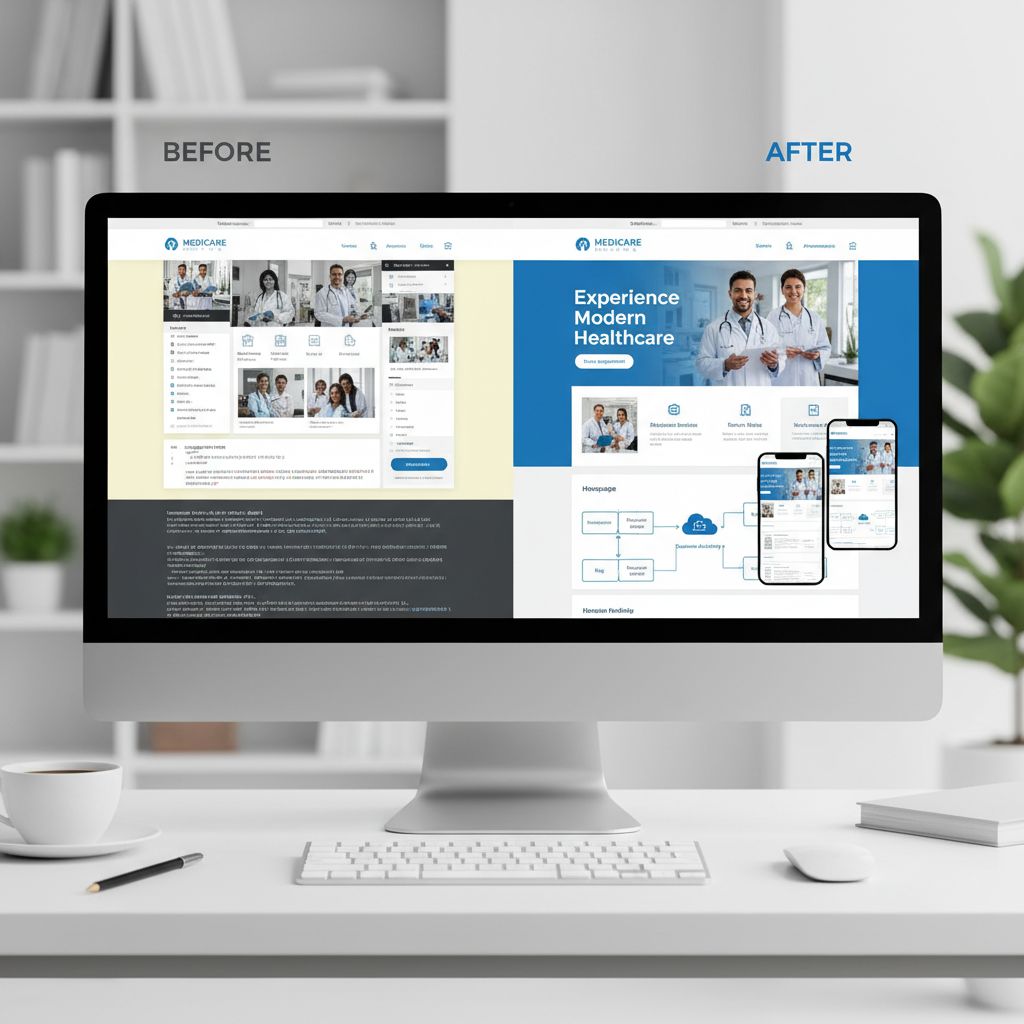
When a patient searches for a doctor on their phone and lands on a website that's hard to navigate on mobile, they leave within 10 seconds and call your competitor. Mobile optimization is not optional — it's the primary design requirement for healthcare websites in 2026.
The Mobile-First Design Principles for Healthcare
- Design for the smallest screen first, then scale up
- Minimum 44px touch targets for all buttons and links
- Single-column layouts that don't require horizontal scrolling
- Click-to-call phone numbers that work with one tap
- Simplified navigation with a clear mobile menu
- Forms optimized for mobile keyboard input
Mobile Page Speed: The Non-Negotiable
Google uses mobile page speed as a direct ranking factor. Healthcare websites should target a Google PageSpeed score of 90+ on mobile. The most common culprits for slow mobile load times are unoptimized images, render-blocking JavaScript, and excessive third-party scripts.
A 1-second improvement in mobile page load time increases healthcare website conversions by an average of 27%. Speed is not just a technical metric — it's a revenue driver.
Frequently Asked Questions
What is the difference between responsive design and mobile-first design?
How do I test my healthcare website's mobile performance?
Ready to Implement These Strategies?
Our healthcare marketing specialists handle everything — from technical SEO to content creation to review management. No long-term contracts.
Get a Free Consultation