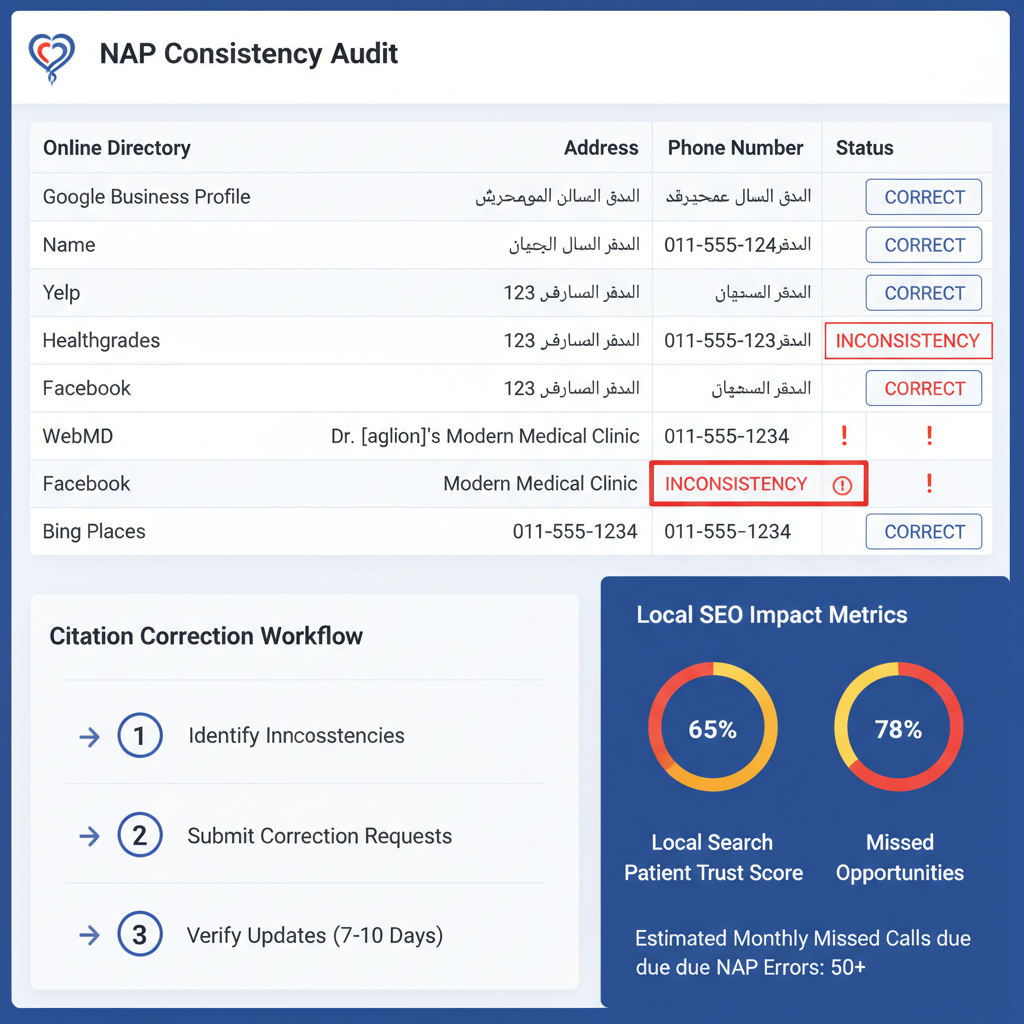
When it comes to local citation authority for healthcare practices, not all directories are created equal. A listing on Healthgrades carries far more weight for a medical practice than a listing on a generic business directory — even if both have similar domain authority scores. Google's local algorithm recognizes healthcare-specific directories as authoritative sources for medical provider data, and AI systems preferentially cite them when generating provider recommendations.
Tier 1: The Essential Healthcare Citation Directories
These are the directories that every healthcare practice must be listed on. They are recognized by Google as primary healthcare data sources, they are frequently cited by AI systems when answering patient queries, and they are the first places patients look when researching providers.
- Google Business Profile — the single most important citation for local search and Maps rankings
- Healthgrades — the largest healthcare-specific directory, with 1M+ monthly visitors
- Zocdoc — appointment booking platform with strong local search integration
- Vitals — physician rating and review platform with high domain authority
- WebMD — the most trusted consumer health information source, with physician directory
- US News Health — high-authority rankings and directory for specialists
- RateMDs — patient review platform with strong local SEO signals
- Yelp — general directory with significant healthcare search traffic
Tier 2: Specialty-Specific and Institutional Directories
Beyond the universal healthcare directories, specialty-specific and institutional citations provide additional authority signals that are particularly valuable for specialists and multi-location practices.
- Hospital affiliation directories — listings on affiliated hospital websites provide institutional authority
- State medical board directories — official professional credibility signals
- Specialty association directories — AMA, ADA, AAO, and other specialty organization listings
- Insurance provider directories — listings in payer directories for patient acquisition from specific insurance networks
- Doximity — physician professional network with strong healthcare authority signals
- Castle Connolly — top doctor recognition with high-authority citation value
- Sharecare — health and wellness platform with growing local search presence
Why Healthcare-Specific Directories Outperform General Directories
Google's local algorithm assigns different weights to citations based on the relevance of the source to your business category. A citation on Healthgrades tells Google's algorithm something specific: this is a verified healthcare provider. A citation on a generic business directory tells Google only that a business exists at this address. For healthcare practices, the combination of healthcare-specific directory citations and general high-authority directory citations creates the strongest possible citation profile.
AI Systems and Healthcare Directory Citations
When patients ask AI systems like ChatGPT, Gemini, or Perplexity for healthcare provider recommendations, these systems draw from the same authoritative sources Google uses — with a particular preference for healthcare-specific directories. Practices with complete, accurate listings on Healthgrades, Zocdoc, WebMD, and Vitals are significantly more likely to appear in AI-generated provider recommendations than those relying solely on general directories.
Managing Your Healthcare Directory Listings at Scale
For multi-location practices or practices with multiple providers, managing healthcare directory listings manually is not feasible. Each provider and each location needs its own listings on every relevant directory — with consistent NAP data, accurate specialty information, and up-to-date photos and bios. X6's citation management system handles this at scale, ensuring every provider and location is accurately represented across all 1,500+ citation sources.
Healthcare practices with complete listings on the top 20 healthcare-specific directories see 3x more AI-generated citation appearances and 45% more patient inquiries from directory sources than those relying on general business directories alone.
Frequently Asked Questions
Which healthcare directory is most important for local SEO?
Do I need to claim and manage my listings on every healthcare directory?
How do insurance directory listings affect local SEO?
Ready to Implement These Strategies?
Our healthcare marketing specialists handle everything — from technical SEO to content creation to review management. No long-term contracts.
Get a Free Consultation